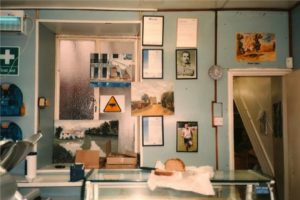
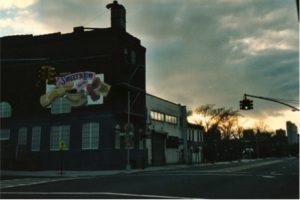
For as long as I have lived in the street I live in, which is fifty-three years, the one thing that hasn’t changed – although it has been spruced up recently – is the pawn shop on the corner.
The little tobacconist at the other end of the street, with its bad-tempered owner who became my friend when I persuaded the Council not to pull his house down but just chop it free of the house next door, is long gone. So is he: back to Goa from where he and his wife had come, via Uganda, many years ago.
They were luckier than those other refugees, just around the corner from the pawn shop, who created a magical cave-like coffee house: the seats low, the walls rich with coloured hangings and, at the corner table – a constant presence – the mother of one of them, still dressed in the flowing manner of the land from which she had come. Mercifully, she died just before these two enterprising foreigners had to close down because their landlord (also a kind of foreigner if, as I am told, he lives abroad) raised the rent beyond the means of a small, independent business.
Also gone are two of the three pubs we once had in our street.
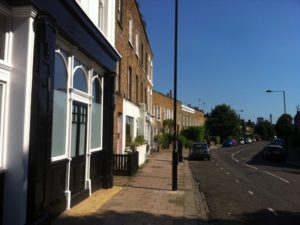
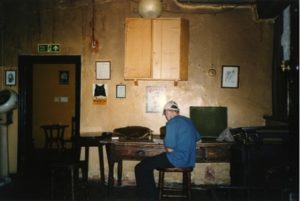
A former pub, lost to flat conversion. Photograph courtesy of Tom Kihl, Kentishtowner.
And, round the corner, from where the tobacconist and his family lived – behind the counter, behind the curtained doorway, in that half house – a whole street disappeared! The laundrette, the Film Co-op where we sat on old mattresses watching Kenneth Anger films, the sweet shop – all gone. But, in their place, a well-designed and leafy council estate, though how many of those desirable, balconied flats are still lived in by council tenants is anybody’s guess.
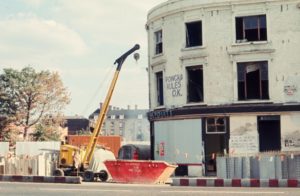
Demolition of Prince of Wales Crescent, Kentish Town, early ’70s. Photograph by Jeremy Ross, courtesy of Kentishtowner.
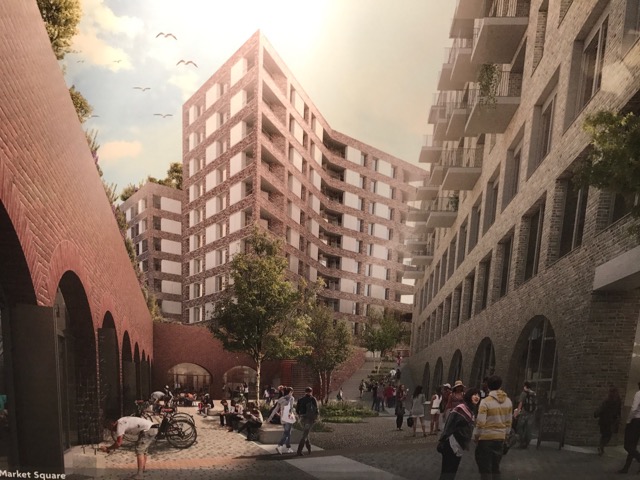
In our own street – ninety per cent council-owned when I and my first husband (also long gone) scraped together the £1,500 deposit for a council mortgage – you could probably now count the council-tenancies on the fingers of one hand. And, where the bus garage once stood, we now have a gated community where the ‘bijou town houses’, though built on the same scale as their early Victorian equivalents, have none of their tenderness.
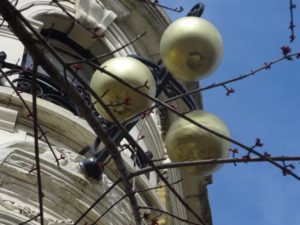
As for the pawnbroker, granddaddy of the Money Shops that have sprung up on our high streets, it must be doing better than ever. Even so, these days there is more money to be made from bricks and mortar than any business could bring in and I expect, before long, the Three Golden Balls will have gone the way of everything else and turned (like Cinderella’s coach) into Three Luxury Apartments.

 Impossible. My yelps of dismay attracted the attention of my husband. He was sympathetic but uncomprehending. And, on reflection, should I not be glad to be able to add another name to the canon of women writers? Another victory for the sisterhood?








 I never got back to Eliot and his unfortunate wife* but, with the kettle on for my hot-water bottle and the Evening Pill Box – lovingly curated by my absent husband – at the ready, I did manage to tap out a testimonial for one of my long-ago authors** who, at seventy, is starting a new career as a hired-hand memoirist, to support her true calling as a brilliant but neglected writer of popular fiction.



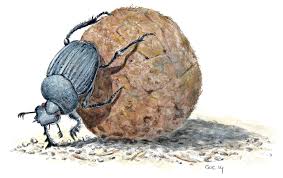 The discovery that dung beetles navigate by the light of the stars is just one of the many wonderful scraps of news I have picked up from turning on the BBC World Service when I come down to the kitchen in the middle of the night, to take some valerian drops or make a cup of cocoa. Another is that there is a language in northern India which has no name. Its 400 speakers just call it Our Language . . .
 As Jilly Cooper said the other day, in a lovely piece about what it is like to be eighty, being up in the small hours comes with the territory; but these broken nights have, thanks to the World Service – truly a service – opened up not only new terrestrial worlds but also the firmament itself: how else would I have known when looking at the Milky Way that every dung beetle in our garden was looking at it too?